

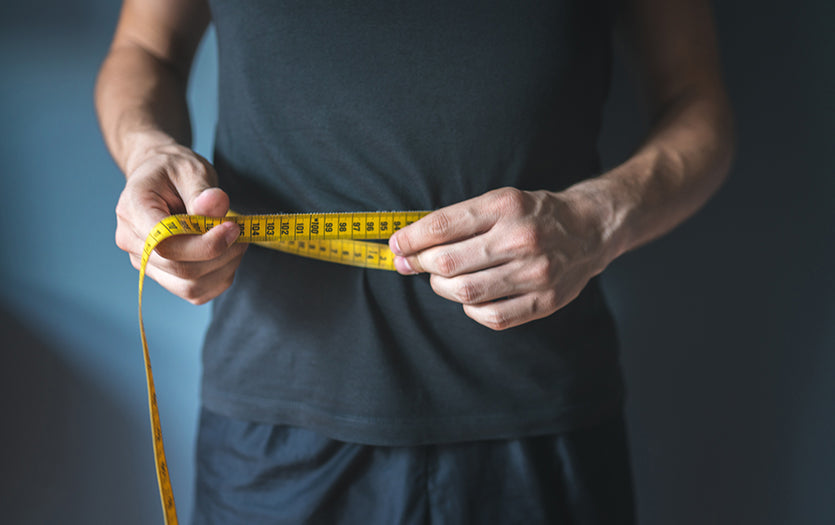
To lose weight safely, eat and drink slightly fewer calories than you use, move more, and aim to lose about 0.5 to 1 kg a week. Malaysia's obesity guidelines suggest realistic goals of up to 1 kg a week and up to 10% of your starting weight, and even a sustained 3 to 5% loss is likely to improve heart and metabolic health. For Malaysians, a BMI of 23.0 or more is already overweight. Build meals on the Ministry of Health's Suku-Suku Separuh plate, choose lighter hawker dishes and drinks, do at least 150 minutes of moderate activity a week, and see a doctor if your BMI is 27.5 or more or you have a health condition.
More than half of Malaysian adults (54.4%) were overweight or obese in the National Health and Morbidity Survey (NHMS) 2023, so if you are trying to lose weight, you are far from alone. This guide brings together the basics and links to our detailed guides on diet, exercise, drinks and weight loss programs.
How much weight should you aim to lose?
Losing weight slowly is more likely to last. The NHS describes losing about 0.5 to 1 kg a week as a safe and sustainable rate.
Malaysia's Clinical Practice Guidelines (CPG) on the Management of Obesity (2nd edition, 2023) suggest these realistic goals:
- up to 1 kg a week;
- up to 10% of your starting weight;
- a total of 3 to 5% of your starting weight if you have heart risk factors such as high blood pressure, high cholesterol or high blood sugar.
You do not need to reach an "ideal" weight to benefit. According to the CPG, a sustained weight loss of 3 to 5% is likely to bring clinically meaningful improvements in heart and metabolic health, and a modest loss of 5 to 10% is linked with better blood pressure and HDL ("good") cholesterol. For someone who weighs 80 kg, 5% is 4 kg.
Are you overweight? BMI and waist size for Malaysians
Body mass index (BMI) is your weight in kilograms divided by your height in metres squared. Malaysia uses lower BMI cut-offs than the World Health Organization's general cut-offs, because health risks start at a lower BMI in Asian populations.
| BMI (kg/m²) | Classification (Malaysian CPG 2023) | Risk of related diseases |
|---|---|---|
| Below 18.5 | Underweight | Low, but with a higher risk of other health problems |
| 18.5 to 22.9 | Normal | Optimal |
| 23.0 to 27.4 | Pre-obese (overweight) | Increased |
| 27.5 to 32.4 | Obese I | High |
| 32.5 to 37.4 | Obese II | Very high |
| 37.5 or more | Obese III | Extremely high |
Your waist size matters too. The CPG uses a waist of 90 cm or more for men and 80 cm or more for women as a sign of higher risk, and recommends checking BMI and waist size every year. In NHMS 2023, 54.5% of Malaysian adults had abdominal obesity by this measure.
Excess weight raises the risk of conditions such as type 2 diabetes, high blood pressure and high cholesterol, so the CPG advises that people who are overweight are also checked for these.
What should you eat to lose weight?
According to the NHS, you are likely to lose weight if you eat and drink fewer calories than you use. As a guide, an average man needs about 2,500 kcal a day and an average woman about 2,000 kcal to stay the same weight.
| Average daily need (to stay the same weight) | Weight loss target (NHS 12-week plan) | |
|---|---|---|
| Men | About 2,500 kcal | No more than about 1,900 kcal |
| Women | About 2,000 kcal | No more than about 1,400 kcal |
Malaysia's obesity guidelines say diets should be tailored to the person, and that cutting calories works best combined with either a lower-carbohydrate or a lower-fat way of eating. Meal replacements or intermittent fasting may be used as alternative ways to cut calories. Very low calorie diets (under 800 kcal a day) should only be followed under the supervision of a medical team that includes a dietitian.
In practice, for Malaysians:
- build each meal on the Ministry of Health's Suku-Suku Separuh plate: a quarter grains, a quarter protein and half fruit and vegetables;
- check the calories in your usual dishes with our Malaysian food calories list;
- follow a ready-made week of meals in our Malaysian diet plan for weight loss;
- get enough protein and fibre with our guides to protein foods for weight loss and fruits for weight loss;
- if cooking is hard, see how to use a meal replacement for weight loss.
How much exercise do you need?
Malaysia's obesity guidelines recommend that adults trying to lose weight do:
- at least 150 minutes a week (about 30 minutes a day) of moderate activity, such as brisk walking, building up to 300 minutes a week (about 60 minutes a day); or
- at least 75 to 150 minutes a week of vigorous activity, such as running or fast cycling.
A mix of moderate and vigorous activity through the week helps you keep the weight off, and the guidelines encourage both aerobic exercise and strength training. For routines you can do at home or in the park, see our guide to weight loss exercises.
10 practical weight loss tips for Malaysians
- Use the Suku-Suku Separuh plate. At a nasi campur stall, that means one scoop of rice, one protein and two vegetable dishes, with the gravy on the side.
- Choose lighter hawker dishes. Based on Malaysian food composition data (MyFCD), a plain tosai with half a cup of dhal is about 205 kcal, compared with about 356 kcal for a roti telur; mee sup is about 383 kcal, compared with about 598 kcal for mee goreng mamak.
- Swap sweet drinks for kosong. A teh tarik is about 125 to 188 kcal, while teh O or kopi O kosong has almost none. See our guides to weight loss drinks and the best and worst Malaysian drinks for weight loss.
- Fill up on fibre. The NHS suggests aiming for at least 30 g of fibre a day from vegetables, fruit, beans and wholegrains, increasing it gradually.
- Plan your meals. Planning the week ahead, including snacks, helps you manage your calories and avoid buying food on impulse.
- Check food labels. Look for the calories listed under "energy" on packaged food and drinks.
- Sit less. The World Health Organization says all age groups should limit time spent being sedentary and that any amount of physical activity is better than none, so take short walking breaks during long work or screen sessions.
- Add strength training. Exercises such as squats, push-ups or resistance bands complement walking and other aerobic activity. See also our guide to selulit (cellulite).
- Look after stress and sleep. The CPG lists stress management alongside healthy eating and physical activity as basic ways to prevent weight gain. If you struggle to sleep, see our guide to insomnia (susah tidur).
- Track your progress. Weigh yourself regularly and measure your waist. Some weeks the scale will not move, so look at the trend over several weeks.
For a step-by-step plan with halal meal ideas and workouts, see Hanna Zainal's ultimate guide to weight loss in Malaysia.
When should you see a doctor about your weight?
Lifestyle changes are the first step for everyone, but some people need extra help. According to the NHS, a doctor can give you advice about losing weight safely and refer you to weight management programmes, medicines or surgery.
Under Malaysia's obesity guidelines:
- Weight loss medicines may be considered if your BMI is 30 or more, or 27 or more with a related health condition. They include orlistat, phentermine with topiramate, naltrexone with bupropion, and high-dose liraglutide or semaglutide. They should only be used together with diet, exercise and behaviour change, and with medical supervision.
- Bariatric (weight loss) surgery may be considered for suitable people with a BMI of 37.5 or more, or 32.5 or more with metabolic syndrome or heart risk factors, when other treatments have not worked well enough.
To compare self-guided, commercial, dietitian-led and medical options, see our guide to choosing a weight loss program in Malaysia.
Do slimming pills and supplements work?
No pill or supplement replaces eating less and moving more. Be especially careful with slimming products sold online: the Ministry of Health has warned against unregistered slimming products found to contain sibutramine, a medicine that was withdrawn in Malaysia in 2012 because of an increased risk of heart disease.
If you are considering a supplement, read our guide to weight loss supplements and slimming pills in Malaysia, which explains what the research says and how to check NPRA registration. Talk to your doctor first if you are pregnant, breastfeeding, under 18, take medication or have a health condition.
More weight loss guides
- Malaysian diet plan for weight loss: 7-day meal plan
- Malaysian food calories list
- Weight loss exercises
- How to choose a weight loss program in Malaysia
- Protein foods for weight loss
- Meal replacement for weight loss
- Weight loss supplements and slimming pills
- The ultimate guide to weight loss in Malaysia (2026)
Frequently asked questions (FAQ)
What is the safest way to lose weight?
Eat and drink slightly fewer calories than you use and be more active, so you lose weight gradually. The NHS describes losing about 0.5 to 1 kg a week as a safe and sustainable rate, and Malaysia's obesity guidelines suggest aiming for no more than about 1 kg a week.
How much weight should I aim to lose?
Malaysia's Clinical Practice Guidelines on obesity suggest realistic goals of up to 1 kg a week and up to 10% of your starting weight. Even a sustained loss of 3 to 5% is likely to bring clinically meaningful improvements in heart and metabolic health.
What BMI is overweight for Malaysians?
Malaysia uses lower cut-offs than many Western countries. Under the Malaysian obesity guidelines, a BMI of 23.0 to 27.4 is pre-obese (overweight) and a BMI of 27.5 or more is obese. A waist of 90 cm or more in men, or 80 cm or more in women, is also a warning sign.
How many calories should I eat to lose weight?
As a guide, the NHS 12-week weight loss plan suggests most men eat no more than about 1,900 kcal a day and most women no more than about 1,400 kcal. Your own needs depend on your age, weight, height and activity.
How much exercise do I need to lose weight?
Malaysia's obesity guidelines recommend at least 150 minutes a week of moderate activity, building up to 300 minutes a week, or 75 to 150 minutes of vigorous activity. Both aerobic exercise and strength training are encouraged.
Are slimming pills safe?
Be careful. The Ministry of Health has banned unregistered slimming products found to contain sibutramine, a medicine withdrawn in Malaysia in 2012 because of an increased risk of heart disease. Prescription weight loss medicines should only be used with a doctor's supervision, alongside diet and exercise.
When should I see a doctor about my weight?
See a doctor if your BMI is 27.5 or more, if you have a condition such as diabetes or high blood pressure, or before trying a very low calorie diet (under 800 kcal a day), which the Malaysian guidelines say should only be done under a medical team that includes a dietitian. Children and pregnant women should not diet without medical advice.
Drann Fat Burner

- Stimulant-free — no jitters, no crash
- Slendacor® — supports up to 15% higher resting metabolism
- Okralin® okra fibre — binds dietary fat so less is absorbed
- Halal-certified ingredients · vegan-friendly · made in Taiwan (GMP)
Disclaimer
This article is for general information only and is not a substitute for advice from a doctor or dietitian. Calorie values are approximate and vary with recipes and portion sizes. Health supplements are not intended to diagnose, treat, cure or prevent any disease.
References
- Clinical Practice Guidelines: Management of Obesity, 2nd edition (2023) — Ministry of Health Malaysia
- NHMS 2023: over half of Malaysian adults overweight or obese (27 May 2024) — CodeBlue
- Losing weight: getting started, Week 1 (NHS 12-week weight loss plan) — NHS
- Understanding calories — NHS
- Obesity: treatment — NHS
- Physical activity (fact sheet) — World Health Organization
- MOH warns Suku-Suku Separuh risks becoming a privilege for the few (22 September 2025) — CodeBlue
- Health Ministry bans two slimming products (8 April 2014) — The Star
- Malaysian food calories list, based on the Malaysian Food Composition Database (MyFCD) — Drann


